Galen University Students Gain Hands-On Archaeological Experience at Baking Pot
2026 Belize Valley Archaeological Reconnaissance Project
Orchard District, Baking Pot
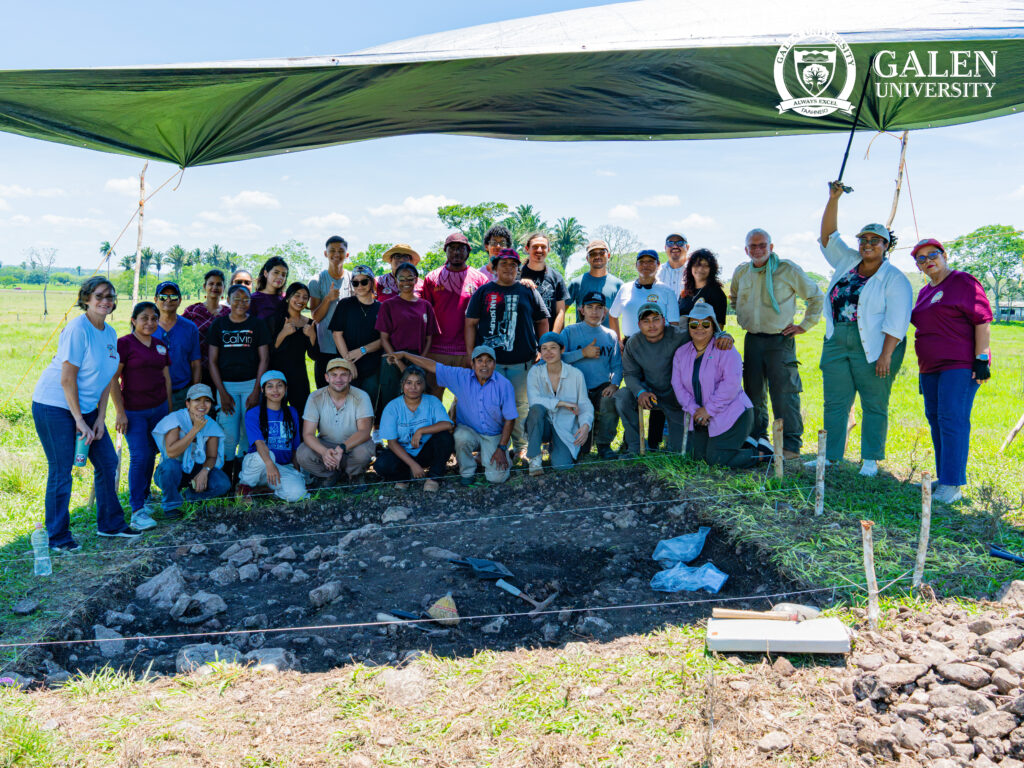
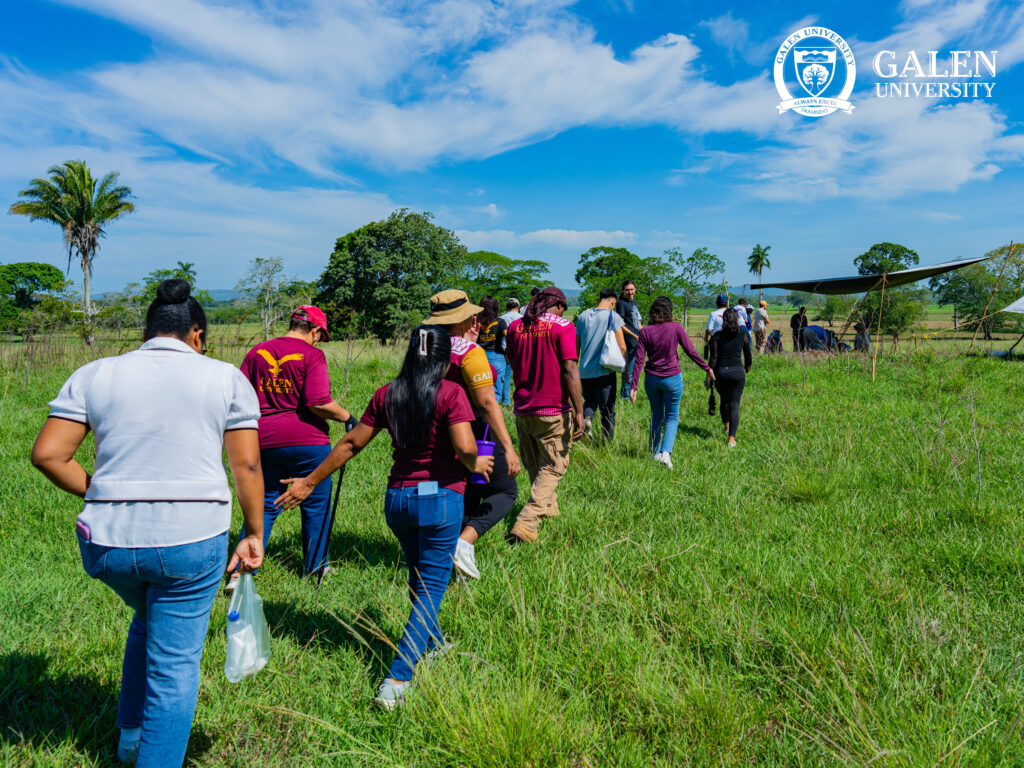
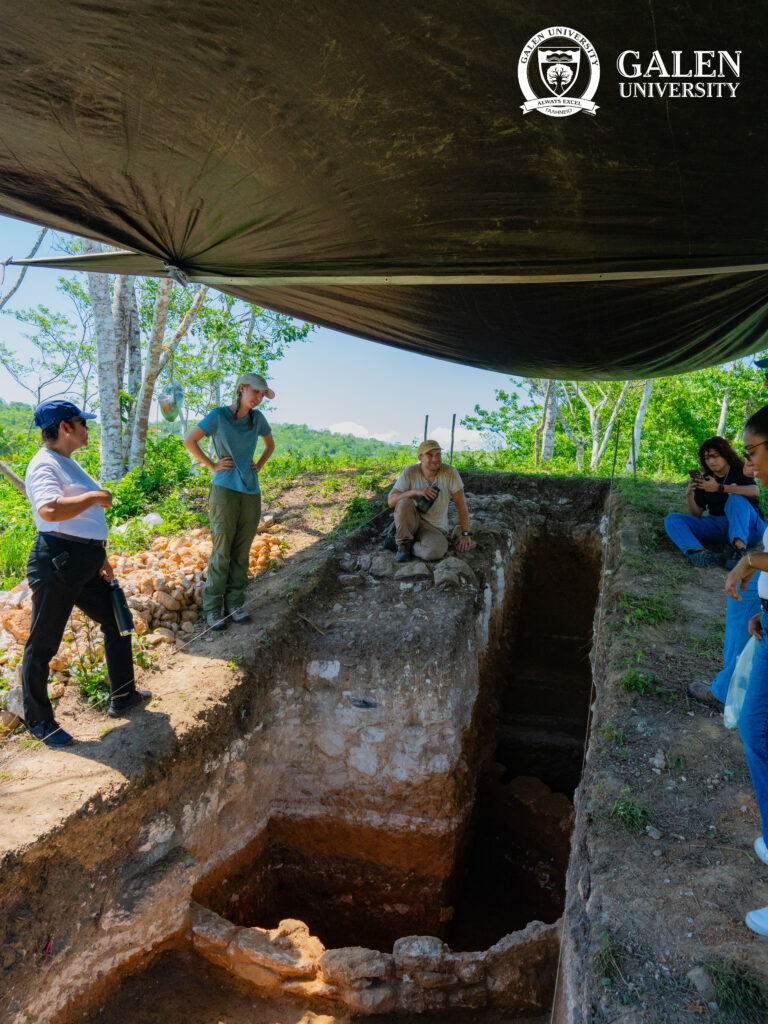
During the 2026 Belize Valley Archaeological Reconnaissance (BVAR) Project field season, students enrolled in Galen University’s Archaeological Field Methods and Archaeology Lab Methods courses conducted excavations within the Orchard District, a peripheral residential cluster situated approximately 2 km southwest of the monumental core of Baking Pot. These investigations formed part of the BVAR Project’s continuing research into Classic Maya households and supported Olivia Ellis’ doctoral research at the University of Pittsburgh. The excavations combined undergraduate archaeological training with research investigating household organization, social differentiation, and community integration within the Baking Pot polity. The Orchard District represents an important component of Baking Pot’s dispersed settlement system. Previous research has demonstrated that the polity consisted of an extensive network of residential districts occupied by households spanning a range of social positions, from intermediate elite minor centers to commoner residences. Current investigations build upon excavations initiated in 2023 that examine the Orchard Group intermediate elite household and its surrounding commoner residences to better understand the relationships between status, foodways, and political organization across the settlement.
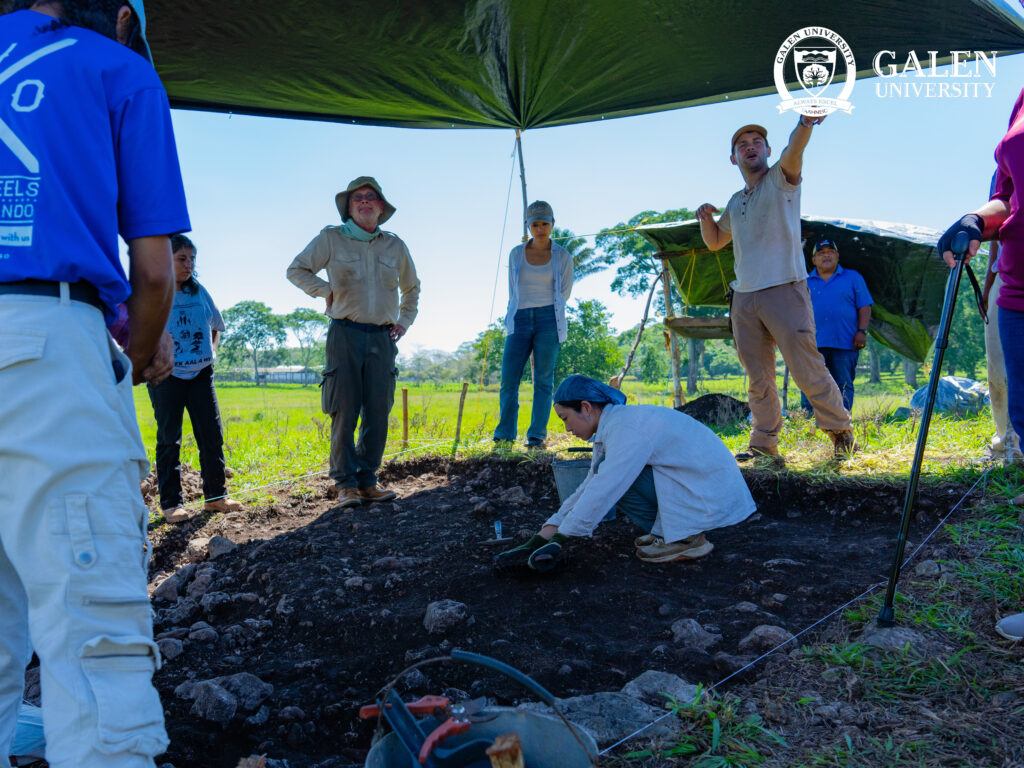
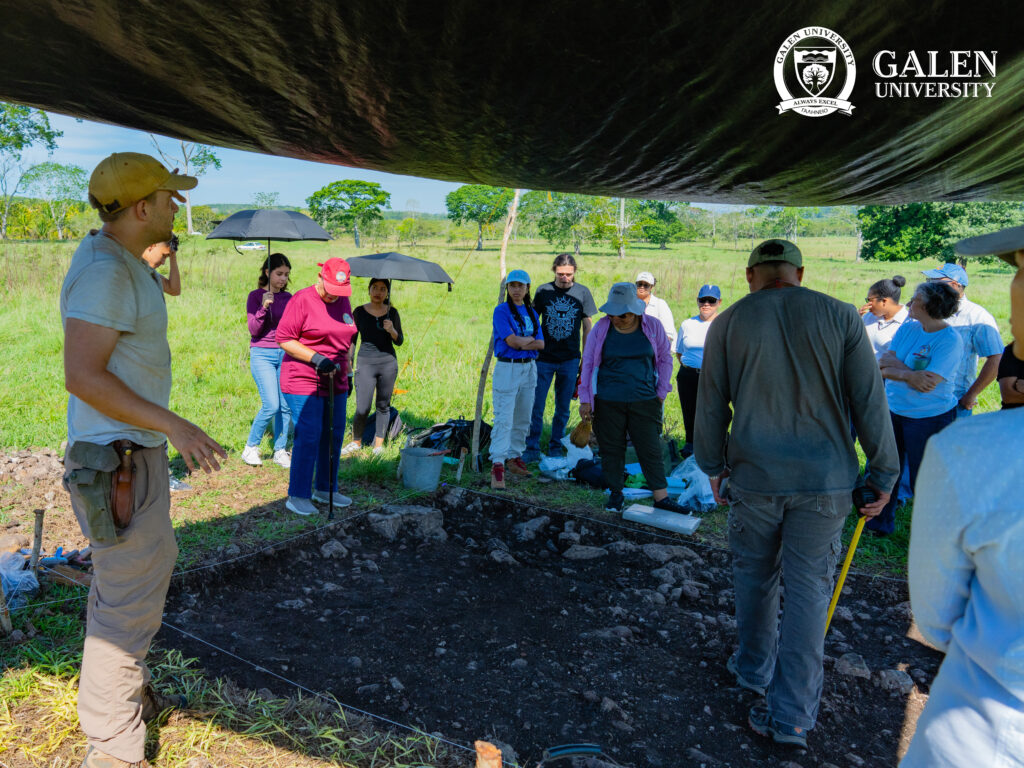
Student excavations focused on three residential groups selected to capture variation in household status within the district. One excavation targeted a relatively large household interpreted as a prosperous farming residence and was supervised by Galen undergraduate Jorge Castellanos, while two additional excavation units investigated smaller commoner households under the supervision of Galen undergraduate Gerrard Aird and Anthropology Club President Abigail Sarmiento. These advanced students were assisted by Mya Bolon, Aaron Depaz, Gia Mai, Timotea Mesh, Asha Ozaeta, Razziel Rodriguez, Leasha St. Clair, Jahmia Swasey, and Joannie Villanueva. This sampling strategy was designed to examine differences in architecture, construction history, artifact assemblages, and household activities while providing comparative data for understanding variation among non-elite households. Together, these excavations contribute to broader research investigating how households participated in the social, political, and economic life of the Baking Pot polity.
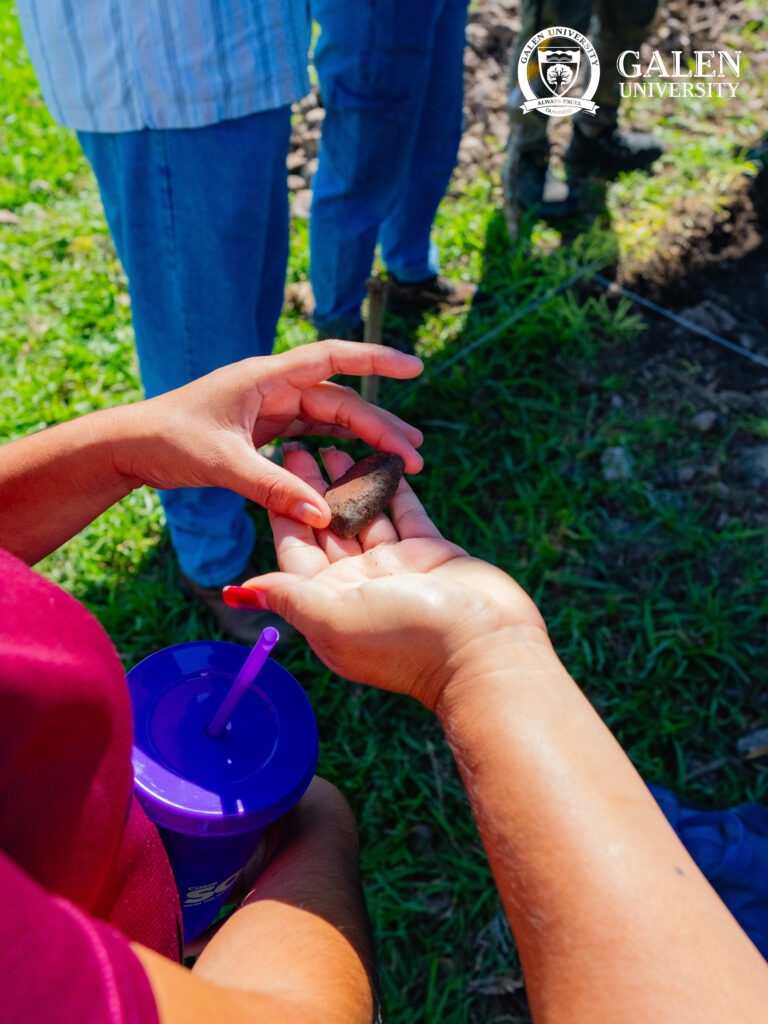
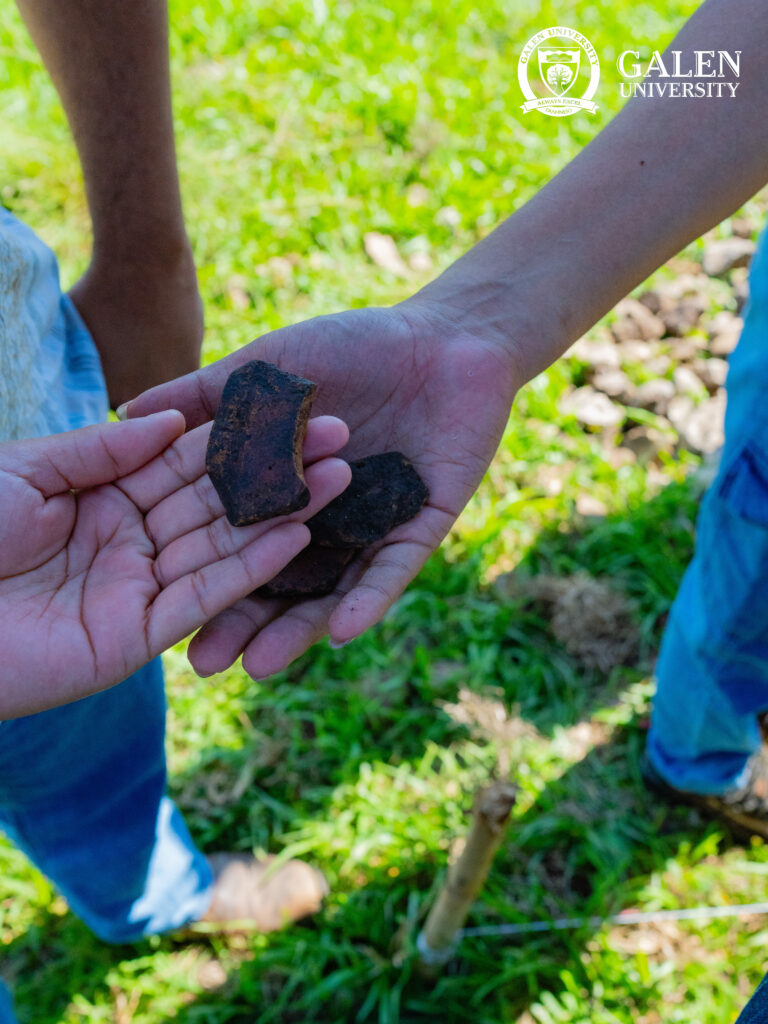
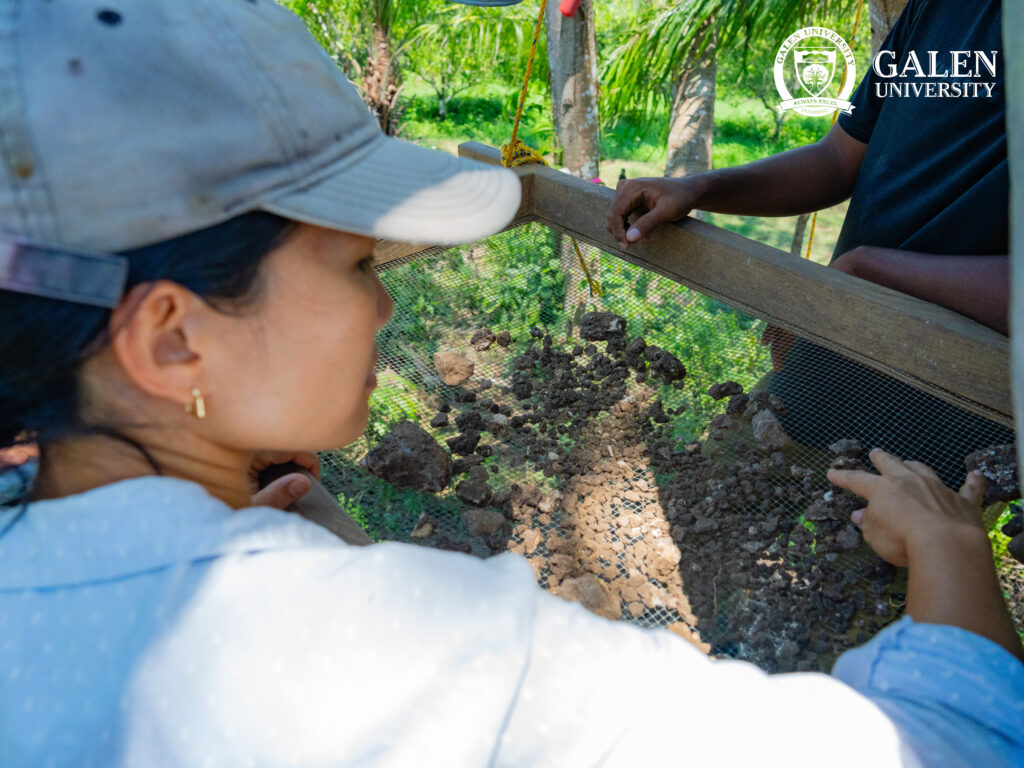
The field school emphasized experiential learning through participation in every stage of archaeological investigation. Students established excavation units, excavated stratigraphically, documented archaeological contexts through detailed notes, photographs, plans, and profiles, screened excavated sediments, processed artifacts, maintained professional field notebooks, analyzed household assemblages, and produced conference-quality presentations reconstructing the developmental histories and domestic activities of each household. Instruction focused on developing competence in excavation techniques, context identification, archaeological recording, survey, artifact analysis, and archaeological interpretation. Recovered archaeological materials included ceramics, chipped stone tools, ground stone implements, faunal and botanical remains, and human burials, enabling students to work alongside specialists to reconstruct household economy, food production and consumption, craft activities, ritual behavior, and long-term changes in settlement organization. Through laboratory analysis and collaborative interpretation, students synthesized multiple lines of evidence to reconstruct who occupied each residence, how households changed through time, and how they interacted with the wider Baking Pot community.
The 2026 Orchard District excavations successfully fulfilled both research and educational objectives. Scientifically, they expand the growing comparative dataset from Baking Pot’s peripheral settlement and contribute to ongoing investigations of household variability, social organization, and intermediate political authority. Educationally, they provided students with intensive hands-on training in archaeological field methods while allowing them to make meaningful contributions to original research at one of the most extensively investigated Classic Maya polities in the upper Belize River Valley. The next phase of the project will see students synthesize their excavation and laboratory datasets into a series of student-led publications to be included in the 2026 Belize Valley Archaeological Reconnaissance (BVAR) Field Report, providing many participants with their first opportunity to contribute to a professional archaeological publication.